
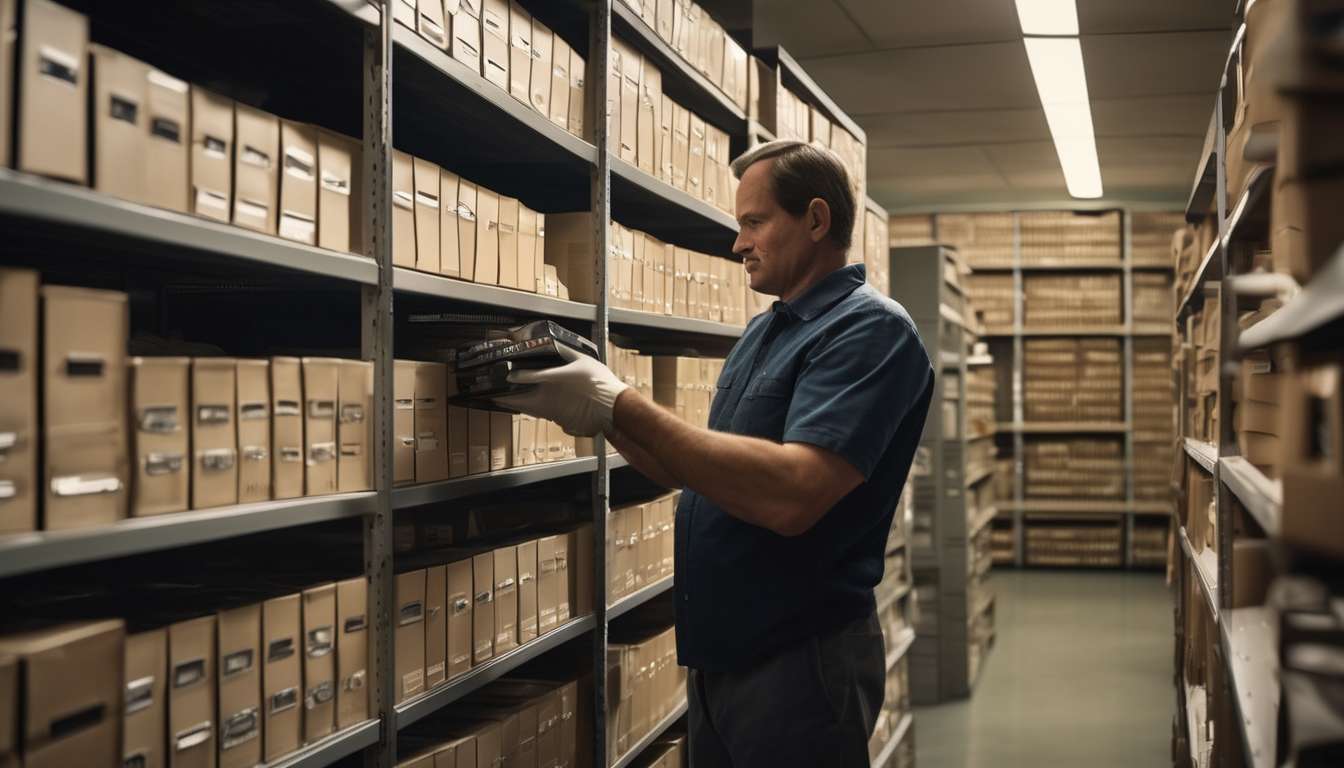
Our work proves that archiving adult video company records is not morally dubious but professionally indispensable.
We manage collections that document contractual histories, performer agreements, licensing timelines, and creative evolution — materials that courts, historians, and rights managers rely upon.
Preserving these records protects intellectual property, ensures compliance with age-verification and labor regulations, and safeguards revenue streams through accurate royalty accounting.
We confront stigma by insisting on rigorous, neutral recordkeeping practices:
- Standardized metadata to ensure discoverability and consistent context.
- Secure storage to prevent unauthorized access or data loss.
- Clear chain-of-custody protocols to maintain evidentiary integrity.
We balance privacy and transparency by employing redaction and access controls to honor performer safety while enabling legitimate research and legal review.
Competent archive management reduces litigation risk, streamlines licensing, and preserves cultural artifacts that chart shifts in media consumption and production ethics.
We advocate for professional standards and training so that these archives serve both business continuity and broader societal understanding without perpetuating harm.
Importance of Archival Standards
We need consistent archival standards to ensure records remain reliable, discoverable, and legally defensible over time.
We believe shared practices help everyone feel included and responsible for preserving our history.
When we adopt digital archiving processes, we create predictable pathways for storing and retrieving files so the team can trust what we keep.
We prioritize clear metadata standards so each item carries necessary context without burdening contributors.
- This ensures consistency that helps new members fit in quickly.
- It reduces disputes about interpretation.
We also maintain an auditable chain of custody to show who handled records and when.
- This protects individuals and the organization.
- It reinforces collective accountability.
By committing to these standards together, we minimize accidental loss, speed up access for collaborators, and strengthen our legal posture.
We don’t leave preservation to chance; we set practical, shared rules that empower our community to steward records responsibly and confidently.
Metadata Best Practices
We’ll define a concise metadata schema, assign required fields, and set controlled vocabularies so every record is findable, interpretable, and reusable.
We’ll adopt community-backed metadata standards to ensure consistency across collections, using clear field definitions for:
- Title
- Creator
- Date
- Format
- Access restrictions
- Rights
In our practice, digital archiving isn’t just technical—it’s communal: we make entries that anyone on our team can understand and extend.
We’ll document provenance and the chain of custody for each item, recording:
- Who handled files
- When transfers occurred
- Any edits made
We’ll use persistent identifiers and version control so records remain traceable.
We’ll provide training materials and templates so contributors feel included and confident applying the schema.
We’ll validate metadata automatically where possible, flagging missing or inconsistent fields for review.
By balancing rigor with approachable guidance, we’ll keep records reliable, discoverable, and governed by shared standards that strengthen our collective stewardship.
Secure Storage Solutions
Encrypted, redundant storage with least-privilege access and integrity checks.
- We store records on encrypted, redundant systems.
- We enforce least-privilege access so users have only the permissions they need.
- We run regular integrity checks (checksums, validation) to detect corruption.
Tiered storage to balance performance and cost.
- Active projects remain on fast storage.
- Long-term assets are moved to cold, cost-effective vaults.
- This preserves accessibility for current work while reducing storage costs for archives.
Consistent digital archiving at ingest.
- We apply metadata standards at ingest to ensure consistency.
- We tag files for discoverability.
- We validate checksums on ingest to detect and record any corruption early.
Role-based controls, multifactor authentication, and access logging.
- We deploy role-based access controls (RBAC) so only authorized teammates can reach sensitive holdings.
- We require multifactor authentication (MFA) for access to protected systems.
- We log access for accountability and auditing.
Geographically separated backups and immutable snapshots.
- We back up across geographically separated data centers to reduce regional risk.
- We use immutable snapshots to resist accidental or malicious deletion.
Format migration with integrity testing and metadata updates.
- When migrating formats, we test integrity (checksum comparisons, file validation).
- We update descriptive metadata to preserve contextual information and provenance.
Disaster-recovery playbooks, objectives, and drills.
- We build disaster-recovery playbooks that define restoration time objectives (RTOs) and procedures.
- We run regular drills to validate processes and keep teams confident in continuity.
Combined technical safeguards and clear procedures for secure, accessible stewardship.
- By combining technical safeguards with clear procedures, we create a secure storage environment that:
- Welcomes contributors through predictable, accessible workflows.
- Protects creative work with layered defenses.
- Supports compliant, sustainable stewardship without sacrificing accessibility.
Chain-of-Custody Protocols
We document every transfer, access, and alteration of records with timestamps, responsible parties, and verifiable signatures so we can prove an item’s history from ingestion through final disposition.
In our work, chain of custody is a shared commitment: we set clear roles, require authenticated logins, and mandate sealed handoffs for physical media.
Our team uses digital archiving tools that log events immutably, and we train everyone to follow the same steps so no one feels isolated in responsibility.
We apply metadata standards consistently, embedding provenance fields, custody notes, and version identifiers so each file carries its story.
When we move items between systems or people, we update metadata and capture signatures, creating an auditable trail.
We schedule periodic audits and reconcile logs collaboratively, inviting feedback to improve processes.
By treating chain of custody as a communal practice, we:
- Protect records reliably.
- Meet legal and business requirements.
- Build trust across the organization.
- Keep procedures straightforward and enforceable.
Privacy and Redaction Strategies
We identify sensitive elements up front and apply consistent redaction rules.
- We assess video content, transcripts, and associated files to flag personal identifiers, contractual clauses, and any third-party data.
- We use clear redaction templates tied to metadata standards to mark what’s removed and why.
- Outcome: Protect privacy without compromising the record’s integrity and enable future team members to contribute and learn with confidence.
We integrate digital archiving tools that preserve originals while exposing vetted derivatives.
- Originals are retained in secure storage; only reviewed, redacted derivatives are made broadly available.
- Every action is logged to maintain a reliable chain of custody so edits are tracked and reversible if needed.
- Outcome: Trust that edits are auditable and recoverable.
We train staff on consistent masking techniques and on balancing transparency with responsible limitation of sensitive material.
- Training covers redaction templates, metadata tagging, and use of archiving tools.
- Emphasis on collaborative procedures and documentation to ensure repeatability.
- Outcome: An inclusive stewardship culture where privacy safeguards are practical, repeatable, and aligned with long-term access goals.
Compliance and Legal Safeguards
We’ll ensure our archive practices meet legal requirements and contractual obligations by implementing clear retention schedules, access controls, and compliance audits.
Key actions:
- Documented digital archiving procedures that teams follow.
- Training staff on metadata standards to make records discoverable and defensible.
- Building a shared framework so everyone feels responsible and supported.
We maintain role-based permissions and multi-factor authentication so access controls are consistent and transparent, helping colleagues trust the system.
Controls and accountability:
- Role-based permissions and multi-factor authentication for consistent access control.
- Logging of every change and transfer to preserve an auditable chain of custody.
- Verifiable provenance for partners and regulators without friction.
We conduct periodic compliance audits and remediate findings quickly, inviting input from legal, records, and operations to ensure policies reflect real workflows.
Audit and governance practices:
- Periodic compliance audits.
- Rapid remediation of findings.
- Cross-functional input (legal, records, operations).
We keep retention schedules aligned with statutes and contracts, and use standardized metadata to reduce ambiguity across systems.
Retention and metadata:
- Alignment of schedules with statute and contract.
- Standardized metadata to improve clarity and interoperability.
By sharing responsibility and keeping processes visible, we create an inclusive compliance culture that protects the organization while respecting the people who maintain and rely on our archives.
Cultural outcomes:
- Inclusive compliance culture.
- Visible processes that protect the organization and its staff.
Licensing and Royalty Tracking
Goal: Systematic license & royalty tracking
We track licenses and royalties systematically so we can accurately attribute usage, automate payments, and prove compliance to rights holders and auditors.
Centralized digital archiving ties each file to clear licensing terms and payment rules, so everyone on the team knows where rights live and how revenue flows.
Metadata standards are enforced for:
- title
- contributor
- license type
- territory
- term
- percentage splits
This ensures records are searchable and auditable.
Chain of custody recording captures every asset transfer, showing who accessed, modified, or distributed content and when.
Automated reporting:
- generates royalty statements,
- flags anomalies,
- initiates payments according to contract rules.
This reduces disputes and fosters trust.
Access controls and immutable logs protect rights holders and make them feel secure and included in the process.
Dispute resolution is faster and fairer because precise records let us identify issues and trace actions quickly.
Outcome: By combining rigorous metadata practices, secure archiving, and transparent workflows, we sustain community confidence and keep revenue flowing to the people who deserve it.
Training for Archive Professionals
We train archive professionals to master licensing, rights management, and secure recordkeeping so they can accurately track royalties and defend compliance.
We build a shared curriculum that balances technical skills and team cohesion.
- Focus areas:
- Digital archiving workflows
- Metadata standards
- Preserving a clear chain of custody for sensitive assets
We run hands-on sessions where colleagues learn to ingest files, apply controlled vocabularies, and validate checksums together.
- Goals:
- Ensure everyone feels competent and connected
- Reinforce practical skills through practice
We practice scenario-based exercises that mirror real incidents—lost metadata, conflicting rights, or compromised transfer logs.
- Benefits:
- Develop rapid, consistent responses
- Surface gaps in procedures before real incidents occur
We emphasize documentation habits and tools that support audits and demonstrate accountability.
We pair new staff with experienced mentors to reinforce standards and foster belonging.
We update training as technology and regulations evolve, and we measure outcomes through compliance metrics, reduced errors, and faster retrieval times.
By investing in focused, practical training, we ensure our archive professionals protect records reliably while working as a cohesive, trusted team.
How do archival strategies differ between adult videos produced in-house versus acquired from third-party studios?
Control, metadata, and rights are the primary comparison points when choosing archival strategies for in-house versus third-party adult videos.
In-house works:
- We create detailed provenance and richer metadata to capture creation context, contributors, and technical specifics.
- We handle versioning and master copies directly, maintaining high-quality masters and controlled derivatives.
- We enforce stricter access policies, with role-based permissions, internal audit logs, and limited distribution to protect IP and privacy.
Third-party content:
- We rely on supplier-provided metadata and then augment it where possible to improve discoverability and preservation.
- We negotiate retention and licensing terms up front to define how long content is kept, how it can be used, and any restrictions.
- We prioritize rights tracking and audit trails to ensure compliance with licenses and to provide equitable access across our team.
Overall best practices:
- Maintain a clear provenance trail for both in-house and third-party items.
- Implement consistent metadata standards so items are searchable and manageable regardless of origin.
- Establish documented access and retention policies tied to licensing and legal requirements.
What are the ethical considerations for preserving content that features performers who later disavow their participation or request removal?
We’re weighing hard ethical questions when performers later disavow participation or ask for removal.
We will respect consent, privacy, and potential harm.
Prioritize clear takedown policies.
Document requests transparently.
We will balance legal obligations, archival integrity, and the performer’s wellbeing.
Offer remediation options such as anonymization.
Engage affected performers in decisions about their material.
We will review consent practices to prevent future harms.
Ensure accountable, compassionate stewardship.
How should archives handle video formats with DRM or proprietary encryption that prevent long-term preservation and access?
We’re concerned about formats with DRM or proprietary encryption that block preservation and access.
We’ll prioritize documenting technical metadata, negotiating rights and obtaining clean copies or keys, and using legal exceptions where possible.
- Document technical metadata (file formats, codecs, encryption details, checksums).
- Negotiate rights with rights-holders to obtain non-DRM or clean copies.
- Obtain decryption keys or use legal exceptions (e.g., preservation exceptions) where available.
We’ll collaborate with creators, vendors, and communities to seek open formats or escrowed keys.
- Engage creators to provide open or documentation-friendly formats.
- Negotiate with vendors for escrowed keys or format documentation.
- Work with communities and standards bodies to encourage open, preservable formats.
We’ll also create risk registers, migration plans, and access-restricted emulation or certified viewing environments to maintain continuity and trust.
- Maintain a risk register identifying DRM/proprietary risks and mitigation steps.
- Develop migration plans for format conversion and scheduled refreshes.
- Provide controlled access via emulation or certified viewing environments (access-restricted) to balance preservation with rights compliance.
Conclusion
You’ve seen how rigorous archive management preserves adult video company records, and now you know what matters: consistent archival standards, rich metadata, secure storage, strict chain-of-custody, and careful privacy redaction.
Stay compliant with laws, track licensing and royalties accurately, and train your team to follow protocols.
By applying these practices, you’ll protect assets, reduce legal risk, and ensure records remain reliable, discoverable, and usable for future business and audit needs.