
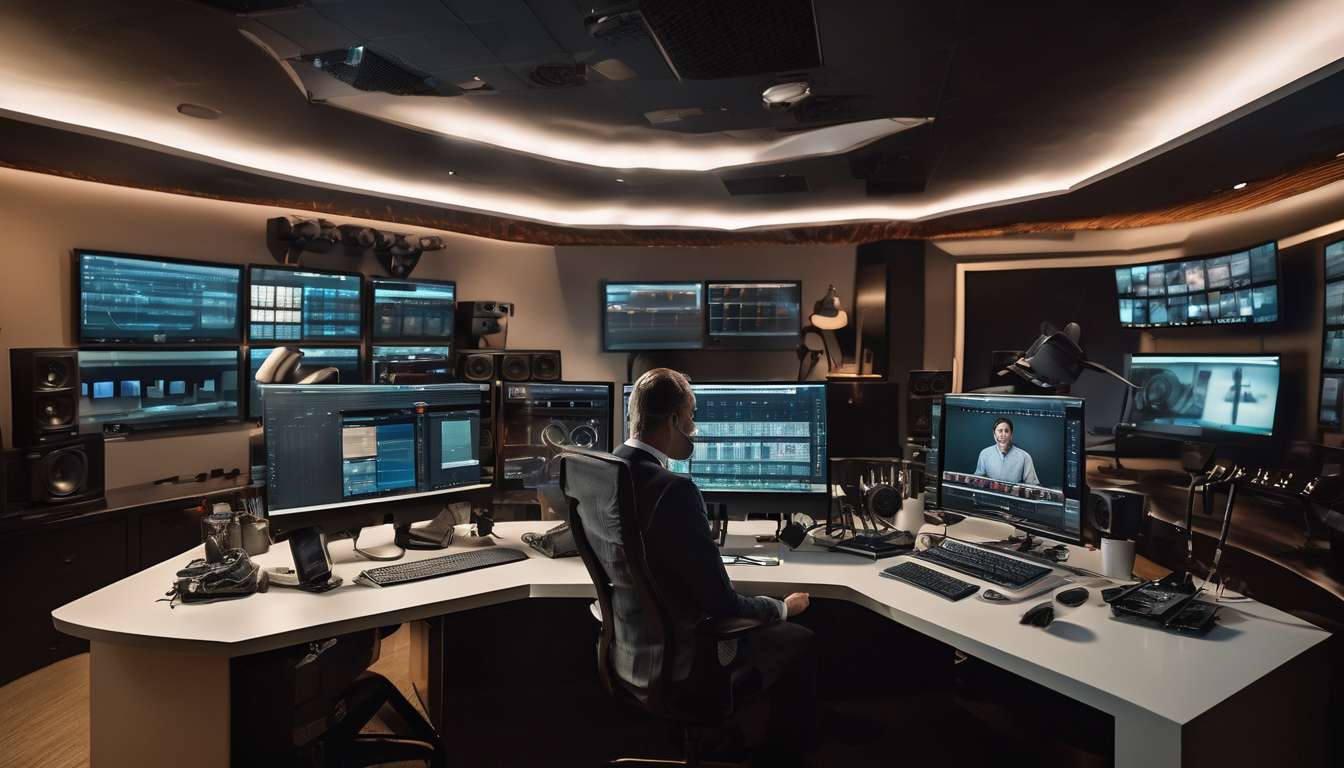
Knowledge is the engine that transforms chaos into choreography: "A well-trained crew turns a production into a promise kept."
We believe that operational training is not an optional add-on but the backbone of a sustainable adult video studio. By treating workflows as teachable systems, we reduce costly rework, protect performer safety, and preserve creative intent.
Training creates measurable organizational benefits.
- It tightens schedules and reduces downtime.
- It strengthens client relations through consistent, predictable delivery.
- It makes compliance a straightforward part of daily routines.
Training empowers every role on set.
- Lighting techs, grips, and camera operators learn to anticipate needs.
- Producers and stage managers learn to communicate clearly and resolve issues.
- Performers and assistants benefit from safer, more predictable environments.
Structured learning approaches we recommend.
- Standard operating procedures (SOPs) for common tasks and checklists for critical steps.
- Role-specific drills to build muscle memory and speed.
- Scenario-based rehearsals to practice responses to equipment failures, scheduling shifts, or safety incidents.
These approaches build resilience against both routine hiccups and unexpected crises. Consistency in practice means fewer disruptions, faster recovery when things go wrong, and preserved creative intent.
This article lays out practical approaches, measurable benefits, and implementation steps so studios can elevate production quality, safeguard people, and run professional, profitable operations.
Why Training Matters
Effective training boosts confidence, reduces errors, and directly improves client experience.
We create an environment of dependable teamwork by tying each role to purpose through clear studio management.
We teach consistent standard operating procedures so tasks don’t depend on memory or guesswork.
- Predictability helps people relax and feel they belong.
Safety and consent are nonnegotiable practices that protect colleagues and clients alike.
- These practices are made practical, taught, and reinforced.
We use scenarios, debriefs, and quick references so staff can apply guidelines calmly under pressure.
- Role-play and real-case discussions translate policy into action.
- Quick reference tools reduce hesitation during high-stress moments.
We encourage questions, celebrate adherence, and correct lapses without blame.
- This builds trust and mutual accountability.
When training centers belonging and clarity, turnover drops, performance improves, and operations run more smoothly.
Why training matters: it aligns people around reliable systems and shared values that keep the studio safe, respectful, and effective.
Core Operational Skills
Core operational skills: scheduling, equipment upkeep, client intake, and incident response.
We coordinate schedules so everyone knows call times and roles, reducing stress and fostering trust.
We maintain gear with routine checks and logs, so shoots run smoothly and people feel secure in the environment.
We run a welcoming and thorough client intake process that:
- collects necessary details,
- confirms boundaries, and
- sets expectations so contributors feel seen and respected.
We train teams to handle incidents calmly and transparently, prioritizing wellbeing and de-escalation.
That clarity supports collective responsibility and belonging, reinforcing that each person matters.
While detailed SOPs are covered elsewhere, we emphasize these practical habits:
- Clear communication.
- Consistent maintenance routines.
- Empathetic intake conversations.
- Swift, respectful incident response.
These core skills create a reliable framework where safety and consent aren’t afterthoughts but everyday practice.
Standard Operating Procedures
We document clear, accessible procedures that guide everyone through common tasks, edge cases, and emergencies so people can act confidently and consistently.
We create standard operating procedures (SOPs) that reflect our shared values and the realities of studio management, making responsibilities explicit and minimizing uncertainty.
Each procedure includes:
- Step-by-step actions
- Required materials
- Decision points
These elements ensure team members can follow the same path under pressure.
We build procedures collaboratively, inviting input from performers, crew, and support staff so everyone feels seen and invested.
We keep language direct and nonjudgmental, and we update documents after incidents or improvements so the manual stays living and useful.
We flag protocols that prioritize safety and consent, outlining how to pause, report, and resolve concerns without stigma.
We integrate SOPs into training, so new and existing team members regularly reference and internalize them.
By centering clarity, mutual respect, and shared responsibility, our standard operating procedures strengthen trust and make studio management more reliable for everyone.
Role-Based Drills
Role-based drills put each person through realistic scenarios so they can practice responsibilities, communication, and decision-making under pressure.
We design exercises that mirror common shoot-day challenges in studio management—technical failures, scheduling conflicts, and interpersonal tensions—so everyone knows their role and feels supported.
We rotate roles so crew, performers, and coordinators experience others’ perspectives, strengthening empathy and team cohesion.
Every drill is tied to our standard operating procedures to test whether written steps translate into smooth action and to identify where revisions are needed.
We debrief together after each run to share observations, admit mistakes, and agree on concrete fixes.
Scenarios are pragmatic and time-boxed to respect busy schedules while building muscle memory.
We document outcomes, update training materials, and invite feedback so the process evolves with the team.
Our goals are clear:
- Foster belonging and trust in procedures.
- Ensure people can act confidently during shoots.
- Improve operations while keeping safety and consent central — without duplicating protocol details.
Safety and Consent Protocols
We establish clear, practiced consent checks and safety checks before every session so everyone knows how to stop, ask, and support in real time.
We outline explicit signals, timeouts, and aftercare roles in our standard operating procedures so every team member feels respected and included.
In studio management meetings we review these protocols, invite feedback, and update language to reflect lived experience and legal standards.
We create an intake checklist that confirms capacity, boundaries, and emergency contacts, then record consent steps in call sheets.
We train crew on de-escalation, privacy, and nonjudgmental communication so responses are calm and consistent.
We document incidents and follow-up actions to improve systems, not to blame, fostering a culture where reporting is supported.
We schedule regular refresher trainings that normalize asking questions and setting limits, strengthening trust across performers, crew, and producers.
By embedding safety and consent into daily practice, we build a community where people belong and feel protected.
Scenario-Based Rehearsals
We run regular scenario-based rehearsals that let crew and performers practice responses to common and rare incidents so everyone moves confidently and consistently when real situations arise.
We design realistic drills that mirror production pressures while keeping rehearsal environments supportive.
- This helps our team internalize studio management priorities without fear of judgment.
We follow clear standard operating procedures during each run‑through.
- We pause to debrief steps that didn’t work.
- We update checklists collaboratively.
We emphasize communication routines that safeguard safety and consent.
- We rehearse how to halt a scene.
- We rehearse how to address concerns.
- We rehearse how to document outcomes.
We rotate roles so everyone understands responsibilities from talent advocate to floor manager.
- This builds mutual trust and shared ownership.
We simulate operational failures and breaches to refine practical problem‑solving and minimize downtime.
- Equipment failures.
- Schedule changes.
- Boundary breaches.
By practicing together, we strengthen relationships and normalize speaking up.
- Responses become muscle memory.
Our rehearsals are concise, actionable, and tied directly to operational policies.
- The whole team arrives prepared, aligned, and respected on every shoot.
Measuring Training Impact
We track concrete metrics and gather team feedback so we can verify that rehearsals reduce errors, improve response times, and increase confidence on set.
We measure incident rates, setup and turnaround times, and adherence to standard operating procedures to see where training changes behavior.
We collect anonymous surveys after sessions so everyone can share what felt clear or risky, especially around safety and consent, without fear of judgment.
We run brief practical assessments:
- Timed equipment setups
- Mock emergency responses
- Role-play checklists that reflect real shifts in studio management roles
We compare pre- and post-training data to quantify gains and spot persistent gaps.
When patterns emerge, we discuss them openly in team debriefs:
- Celebrate improvements
- Map targeted follow-ups
That transparency strengthens belonging, because each person’s input visibly shapes our practices.
By combining hard metrics with lived experience, we ensure training is purposeful, measurable, and centered on a respectful, safe workplace.
Implementing Ongoing Learning
We schedule recurring micro-training sessions and refresher drills so our team keeps skills sharp, adapts to new equipment, and addresses persistent gaps revealed by our measurements.
We build a learning cadence tied directly to studio management needs:
- Quick role-specific modules
- Hands-on practice
- Short debriefs after shoots
We keep materials centralized so everyone can access updated standard operating procedures, checklists, and short how-to videos that respect diverse learning styles.
We create peer-led cohorts so colleagues mentor one another, reinforcing shared responsibility for safety and consent and strengthening trust across roles.
We track completion and competence with simple metrics, then iterate content when trends show confusion or risk.
We celebrate progress in team meetings and invite feedback to make learning feel collaborative, not punitive.
By making ongoing learning predictable, relevant, and inclusive, we cultivate a culture where everyone belongs and contributes to safer, more efficient studio management.
How can studios balance participant privacy with data collected during training (recordings, performance metrics) and who owns those training assets?
Question: How do studios balance participant privacy with training data and who owns those assets?
Consent and access rules.
We set clear, documented consent and access rules before recording or using participant data. Consent specifies what data will be used, for what purposes (training, evaluation, demo), and who can access it.
Anonymization and minimization.
We anonymize or pseudonymize recordings when possible and collect only what’s necessary. This reduces privacy risk while preserving data utility for training.
Retention limits.
We limit how long recordings and derived data are stored and define retention schedules and automatic deletion procedures.
Role-based permissions.
We enforce role-based access controls so only authorized team members can view or use sensitive recordings and training assets.
Participant review and deletion.
We provide mechanisms for participants to review recordings and request corrections or deletion where feasible, subject to contractual and legal limits.
Ownership and contractual clarity.
Ownership should be explicitly spelled out in contracts and consent forms. Common arrangements include:
- Studios hold operational copies and derivative assets needed for development and maintenance.
- Participants retain personal rights to their likeness and may grant limited licenses for specific uses.
- Rights can be shared or licensed (e.g., studio owns models and datasets, participant grants a usage license).
Principles and culture.
We prioritize transparency, respect, and collective care: clearly communicate practices, handle requests promptly, and design workflows that protect participant dignity and autonomy.
What specific legal or regulatory considerations unique to adult production should be included in training that aren’t covered under general workplace safety or consent protocols?
Which legal and regulatory matters are unique to adult production (beyond general safety and consent)
Age verification and recordkeeping requirements
- Adult production requires robust age verification systems distinct from ordinary businesses. This includes collecting, verifying, and securely storing government-issued IDs and metadata proving performer legal age.
- Recordkeeping obligations (the functional equivalent of 18 U.S.C. § 2257 in the U.S. and other jurisdictions’ laws) mandate retention of age documentation and a clear indexing system so records can be retrieved for inspections or legal inquiries.
- Security and access controls for these records are essential to protect performer privacy and to meet legal chain-of-custody expectations.
Obscenity, criminal laws, and local zoning restrictions
- Producers must evaluate obscenity laws at federal, state/provincial, and municipal levels; what is protected speech in one jurisdiction may be criminal in another.
- Local zoning and adult business licensing: filming locations and business premises must comply with zoning ordinances and any licensing requirements for adult-entertainment operations.
- Maintain legal review processes to assess content risk before distribution and to respond quickly to civil or criminal complaints.
Scope of performer releases and distribution permissions
- Releases must clearly define distribution channels, sublicensing, and duration — e.g., website streaming, downloadable files, third‑party platforms, clips sold to aggregators, international distribution.
- Include express consents for rights that are unique to adult content: explicit sexual acts, use of stage names, likeness in marketing, and possible future uses (edits, compilations, AI-synthesized derivatives if permitted).
- Ensure releases address IP ownership, revenue splits, and termination or takedown procedures.
STI testing, medical privacy, and data-protection rules
- Many adult productions implement routine STI testing protocols; these have legal and practical implications for recordkeeping, confidentiality, and workplace safety obligations.
- Medical privacy laws (e.g., HIPAA in the U.S. and equivalent rules elsewhere) govern how testing records and health information are handled and disclosed.
- Policies must balance public-health obligations, performer privacy, and legal compliance for disclosure to third parties (bookers, agencies, platforms).
Payment processing, tax, and labor classification
- Banks and payment processors often impose special risk assessments or outright restrictions on adult-industry transactions; producers must plan for elevated merchant‑account scrutiny or use industry‑specialized processors.
- Correct classification of performers (employee vs. independent contractor) affects payroll tax, benefits, workers’ compensation, and labor-law compliance; misclassification risk carries fines and back-pay exposures.
- Sales tax, VAT, and other indirect tax issues can arise depending on the product (streaming, downloads, physical goods) and the purchaser’s jurisdiction.
Platform-specific content policies and takedown procedures
- Every distributor or platform (hosting sites, payment gateways, ad networks, app stores, social platforms) has distinct content and moderation policies that may be stricter than local law.
- Producers must map each platform’s prohibitions and required metadata (age-affirmation headers, manifests) and implement workflows for rapid compliance and appeals when content is removed.
International export/import and cross-border restrictions
- Distribution across borders triggers export/import and customs rules, classification issues, and potential criminal exposure where content is illegal in a recipient jurisdiction.
- Consider geo-blocking, geofencing, and jurisdictional contractual limits to mitigate extraterritorial risk.
Documentation, audits, and subpoena response training
- Staff must be trained on proper documentation practices: how to collect, index, secure, and purge records according to retention policies and legal requirements.
- Establish procedures and drills for audits and regulatory inspections, including designated points of contact and templated responses.
- Create a clear, legally vetted process for handling subpoenas and law‑enforcement requests that protects performer privacy to the extent permitted by law and preserves privileged communications where applicable.
Operational recommendations (training and compliance controls)
- Establish a written compliance program covering age verification, releases, STI/testing, payment, and platform policies.
- Train staff on documentation standards, chain-of-custody, data security, and privacy law intersections.
- Implement a legal-review gate for new content types, distribution channels, or geographic markets.
- Maintain a rapid-response team (legal + operations + security) for takedowns, subpoenas, or regulator contact.
- Periodically audit records, access logs, and vendor contracts (payment processors, platforms, testing labs) for adherence.
If you want, I can draft:
- A sample age‑verification and recordkeeping checklist tailored to a U.S. production (45 CFR-style detail).
- A performer release template covering distribution channels and AI/derivative rights.
- A short staff training script for subpoena handling and audit preparation.
How should studios adapt operational training for freelance or short-term performers and crew who aren’t present for ongoing learning programs?
We’ll create concise, welcoming onboarding kits for freelancers and short-term crew.
Contents will include:
- Clear role checklists outlining responsibilities and daily expectations.
- Legal and consent briefings covering contracts, releases, and confidentiality.
- Safety protocols with emergency procedures and contact info.
We’ll provide short interactive modules and quick-reference cards they can access anytime.
Features:
- Interactive modules for key policies and procedures.
- Quick-reference cards (digital and printable) for on-set essentials.
We’ll offer a single-point contact for questions.
Benefits:
- Fast answers to reduce confusion.
- Consistent communication for all short-term staff.
We’ll schedule brief paid orientation sessions and debriefs after work.
Structure:
- Paid orientation sessions (short, role-specific).
- Post-work debriefs to gather feedback and confirm handoff.
We’ll invite them into our community channels so they feel included, supported, and confident even when they’re not here long-term.
Outcomes:
- Inclusion and support through ongoing community access.
- Improved confidence and retention among freelance and short-term crew.
Conclusion
You’ve seen how targeted operational training sharpens core skills, standardizes procedures, and prepares teams through role-based drills and scenario rehearsals.
By emphasizing safety, consent, and measurable outcomes, you’ll reduce risks, improve efficiency, and boost professional standards across your studio.
Keep training ongoing, track its impact with clear metrics, and adapt content to real-world lessons.
Doing so ensures consistent quality, safer productions, and a culture that prioritizes respect and continuous improvement.